Influence starts with Relationships
As I look back on all the conferences that I've attended, one thing stands out: it wasn't the talks, the dinners, or the parties. It has been the people and the relationships I've built. My career has been shaped by a series of face-to-face interactions that eventually led to opportunities to influence decisions. I’ve built an incredible network of connections who trust me and who have been willing to make changes and listen to me over the years. But that is not something that happens overnight.
The most important lesson I learned about influence wasn't from a book, a manager, or a training course. It was from a conference in Rome nearly twenty years ago.
I was sent there by CA Technologies because I convinced management that I needed to learn about this new (to me) security standard called the Common Criteria (CC) that I was going to be working on. It was the first day of the conference; I had spent the weekend touring around Rome and seeing an old friend. But as I came down to the lobby, I didn't know anybody there. The first person I met was David MacFarlane, who was headed to the conference as well. David was the Director of Security Certifications at BlackBerry and we were staying at the same small hotel with a view of the Colosseum.
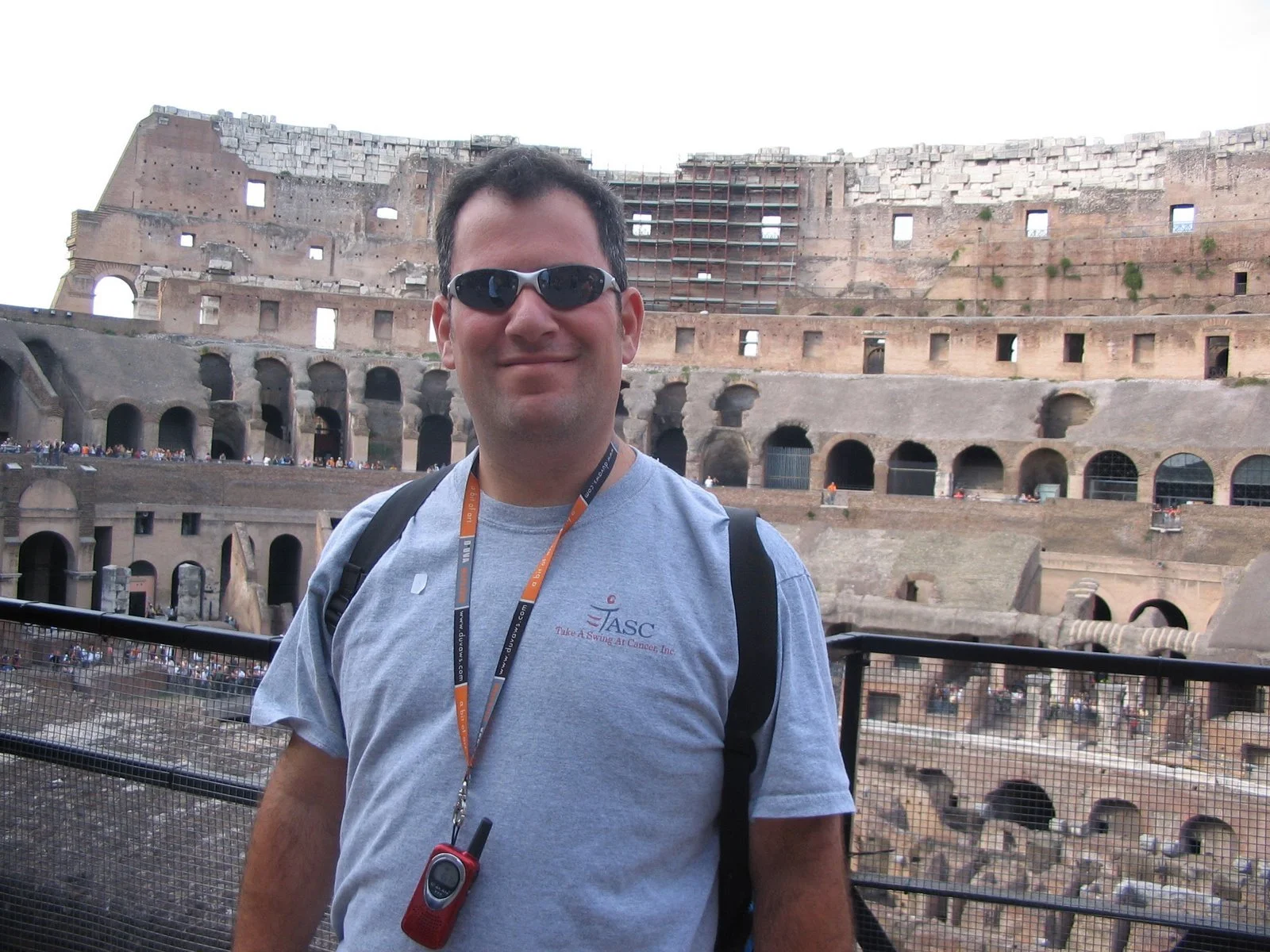
Pictured Josh Brickman at the Colosseum
David introduced me to Wes Higaki from Symantec and Erin Connor from EWA Canada. Those three individuals became my introduction to a niche but fascinating world that would ultimately become the highlight of my career.
In addition to his job at Symantec, Wes was also the chair of the Common Criteria Vendors Forum, which was a collection of users of the CC. He organized a group approach to influencing the standard. The CCVF would develop recommendations and present them to the Common Criteria Development Board (CCDB), the international body responsible for evolving the standard. These were the people shaping the future of the standard.
When people start to respect what you do, they listen, and when you need a favor, they want to help, because you helped them. Wes would approach problems that way with CC. He would identify a problem (or someone would come to him with an issue), write it up, drive consensus, then submit ideas to resolve the issue in a way that gave the bureaucrats the ability to make the case that a change was indeed needed. Wes was a vanguard in the relatively new CC world at that time. We were using Yahoo Groups back then. Before ICCC, Wes would collect questions and issues from the members in the Yahoo group. People would post an issue and Wes would set up meetings (these were all conference calls in those days) to discuss. Then by the time we got to ICCC, he would represent the CCVF in a meeting with representatives from around the world who drove the future of the standard. Not every suggestion was implemented, but as the “voice” of the customer Wes demonstrated that he was an excellent listener and drove many consequential changes to the CC over the years. I didn't realize it at the time, but I was watching a master class in influence. Over the next two decades I would apply many of those same techniques—building relationships, finding consensus, and helping stakeholders solve problems—to initiatives of my own.
Looking back, I thought I was going to Rome to learn a security standard. What I actually learned was how influence works. It wasn't authority. It wasn't job titles. It wasn't even technical expertise. It was relationships. The people I met that week—David, Wes, and Erin among many others—would shape my career for years to come. And one conversation at a future conference would eventually lead to the creation of an international technical community and a set of security specifications that remained in use for more than a decade. That's the story I'll tell in my next post.